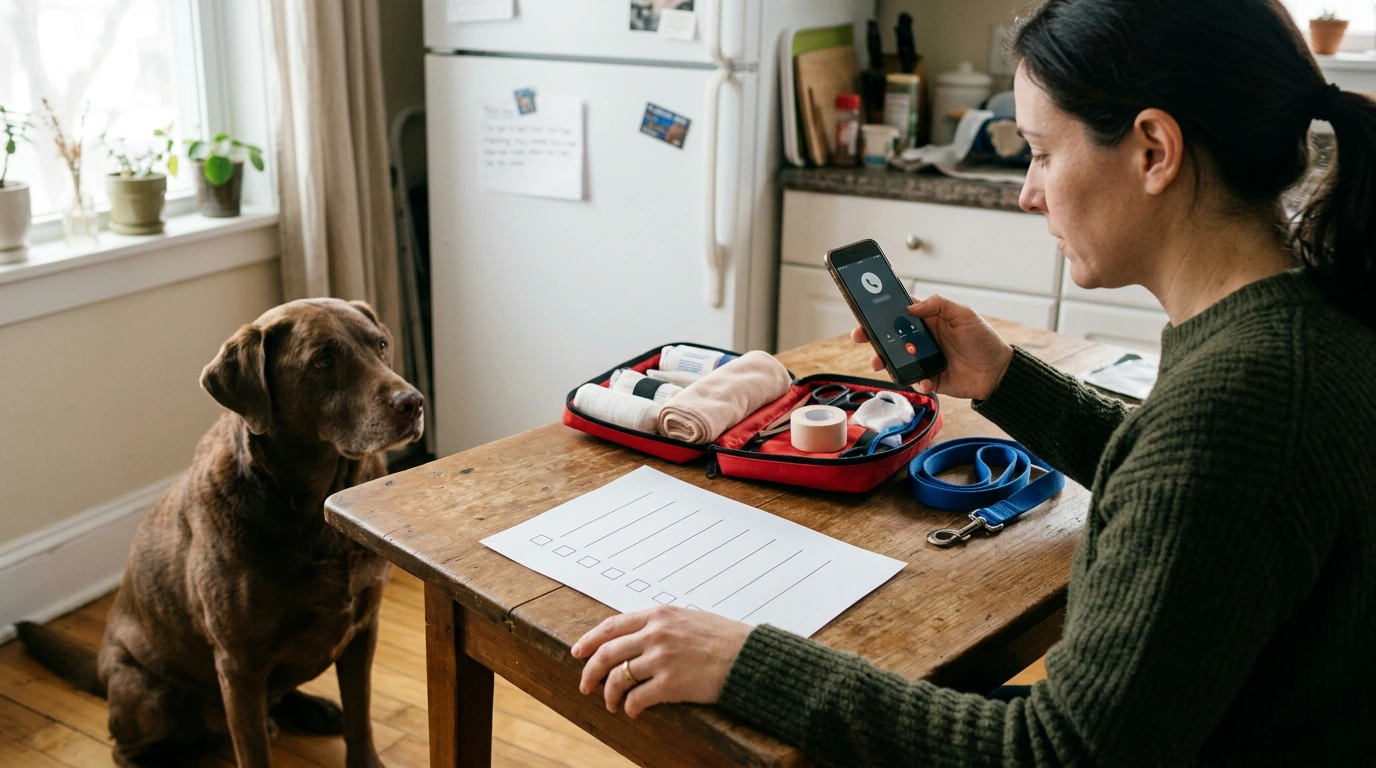
Pet emergencies don’t wait for a convenient moment—or a clear head. In the first 1–5 minutes, the difference between “manageable” and “critical” often comes down to staying calm, reducing risk, and getting the right help moving fast. A printable pet first-aid cheat sheet keeps the essentials visible so decisions feel automatic, even under pressure.
A cheat sheet only works if it’s complete and easy to grab. Take five minutes to fill it out and place it where hands naturally reach during a crisis.
If you want a ready-to-print version designed for high-stress moments, keep the Must-Know Pet First-Aid Cheat Sheet printable guide with your kit so the steps and emergency numbers stay in one reliable place.
Before focusing on the injury itself, start with safety and the basics. This reduces bite risk, prevents worsening trauma, and helps you communicate clearly to a veterinarian.
For additional first-aid fundamentals from veterinary authorities, review the American Veterinary Medical Association (AVMA) first aid tips.
Remove access, save the packaging or a plant sample, and call a vet or poison hotline before doing anything like inducing vomiting. Many toxins require different responses, and the wrong step can cause more harm. The ASPCA Animal Poison Control resource page is a helpful reference for prevention and next steps (always follow professional instructions for your specific case).
| Situation | What you may notice | Do now | Go to emergency care when |
|---|---|---|---|
| Trouble breathing | Open-mouth breathing (cats), wheezing, blue/gray gums, collapse | Keep calm, minimize movement, head/neck neutral; call emergency vet | Any breathing distress or gum color change |
| Uncontrolled bleeding | Blood pooling, soaking bandage quickly, pale gums | Firm pressure 10 minutes; pressure bandage if trained; call vet | Bleeding won’t slow, pet seems weak or gums are pale |
| Heat stress | Heavy panting, drooling, vomiting, wobbliness | Cool gradually with airflow and lukewarm water; offer small sips; call vet | Weakness, vomiting, collapse, or symptoms persist after cooling |
| Seizure | Stiffening, paddling, loss of awareness | Time it; protect from falls; dim lights; keep quiet; call vet after | Seizure lasts >5 minutes, repeats, or recovery is poor |
| Possible toxin exposure | Drooling, vomiting, tremors, unusual behavior, known ingestion | Remove access; keep sample/packaging; call vet/poison hotline | Any neurologic signs, collapse, or ingestion of high-risk toxins |
A well-designed printable reduces mental load when adrenaline is high. The Must-Know Pet First-Aid Cheat Sheet | Emergency Printable Guide for Pet Owners | Vet Tips is made to be posted and used at a glance—especially helpful for multi-pet homes, new pet parents, travelers, and anyone who relies on pet sitters.
For recovery and stress management after an urgent trip to the vet, setting up a quiet, comfortable rest spot can help your pet settle. A portable option like the Cozy Foldable Pet Bed is easy to keep nearby during monitoring. For pets that need calmer downtime during routine days (which can support overall resilience), enrichment can help redirect nervous energy—try the Turtle Puzzle Feeder Toy for slow, focused engagement.
Contact a veterinarian or pet poison hotline first. Inducing vomiting can be dangerous with caustic substances, sharp objects, or if your pet is drowsy, having trouble breathing, or showing neurologic signs.
Minimize movement and keep your pet as still as possible. Use a carrier/box for cats, and for dogs use a firm surface or folded blanket as a stretcher, keeping the head and neck neutral if trauma is suspected.
Include your primary vet, the nearest 24/7 emergency hospital, animal poison control, and a backup caregiver. Add addresses and any quick driving notes (like the closest entrance or after-hours parking).













Leave a comment