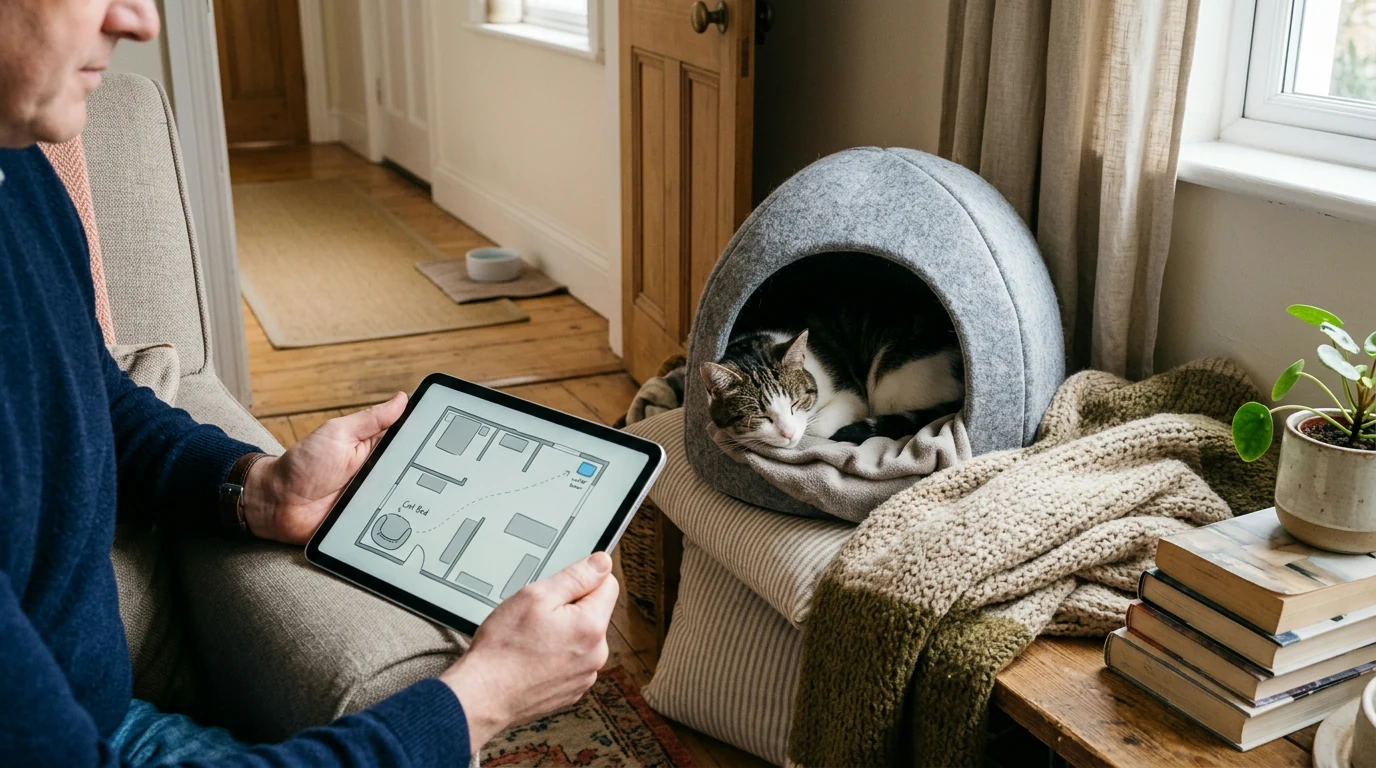
Safe space mapping turns everyday rooms into a clear, practical plan for helping pets feel secure—especially during change, noise, visitors, or recovery. Instead of guessing where your pet “should” relax, mapping shows what “safe” looks like from an animal’s point of view: predictable access, fewer surprises, and the ability to step away without being cornered. The result is a home setup that supports calm behavior, confident exploration, and smoother daily routines.
A true safe space is a predictable area where a pet can retreat without being followed, handled, or startled. It’s less about a specific product and more about a consistent promise: “If you go here, you can decompress.”
Safety is multi-layered:
When a space isn’t working, many pets don’t “complain” directly—they cope. Watch for pacing, hiding in unsafe spots (behind appliances, under recliners), over-grooming, increased vocalizing, guarding, or disruptions to normal eating, litter, or potty routines. If any of these patterns show up around predictable household events, mapping can help pinpoint what’s pushing your pet over threshold.
Mapping is a simple, visual method that reveals where stress builds—and where comfort already exists. Start with a basic floor plan sketch that includes rooms, doors, windows, vents, and the main pathways people use.
| Map Symbol | What It Represents | Examples |
|---|---|---|
| Green zone | Primary safe space | Covered bed in a quiet room, crate with door open, closet nook with airflow |
| Yellow zone | Secondary safe space | Cat tree perch, sofa corner behind a chair, hallway bed away from foot traffic |
| Red zone | High-stress trigger area | Entryway with frequent arrivals, laundry room during machine cycles, loud TV area |
| Blue route | Low-conflict travel path | Route to litter/food that avoids ambush points and tight hallways |
| Purple resource | Key resource location | Water station, puzzle feeder, scratching post, litter box |
If you want a consistent “home base” that’s easy to keep in the same spot day to day, consider adding a defined resting area like the Cozy Foldable Pet Bed to help the space feel familiar and predictable.
For cats that feel safer with height and a vantage point, adding an elevated option near (but not directly above) the retreat can help. A dedicated perch such as the Flower Cat Tree can function as a secondary safe space or a “yellow zone” that supports confidence-building observation.
For broader safety planning—especially when kids or visitors are part of the picture—the AVMA also emphasizes prevention strategies that reduce stressful interactions and surprise approaches (AVMA dog bite prevention and avoiding stressful situations).
A Guide to Safe Space Mapping | Digital Ebook on Understanding, Creating & Using Safe Spaces breaks the process into clear, repeatable steps that work across many home layouts.
Aim for at least one primary retreat per pet, plus one to two secondary options. In multi-pet homes, duplicating resources (water, litter, resting spots) helps prevent one pet from blocking another’s access to essentials.
The best format depends on your pet and your household. A crate or covered bed can feel den-like and portable, while a whole room offers more distance from noise—either way, the key is choice, easy exits, and a strict “no forced interaction” rule.
Some pets use a new setup within a few days, while others take a few weeks. Adoption is faster when the location is genuinely quiet, includes familiar scents, and is paired with low-pressure rewards—avoid carrying your pet into the space or blocking them inside.












Leave a comment